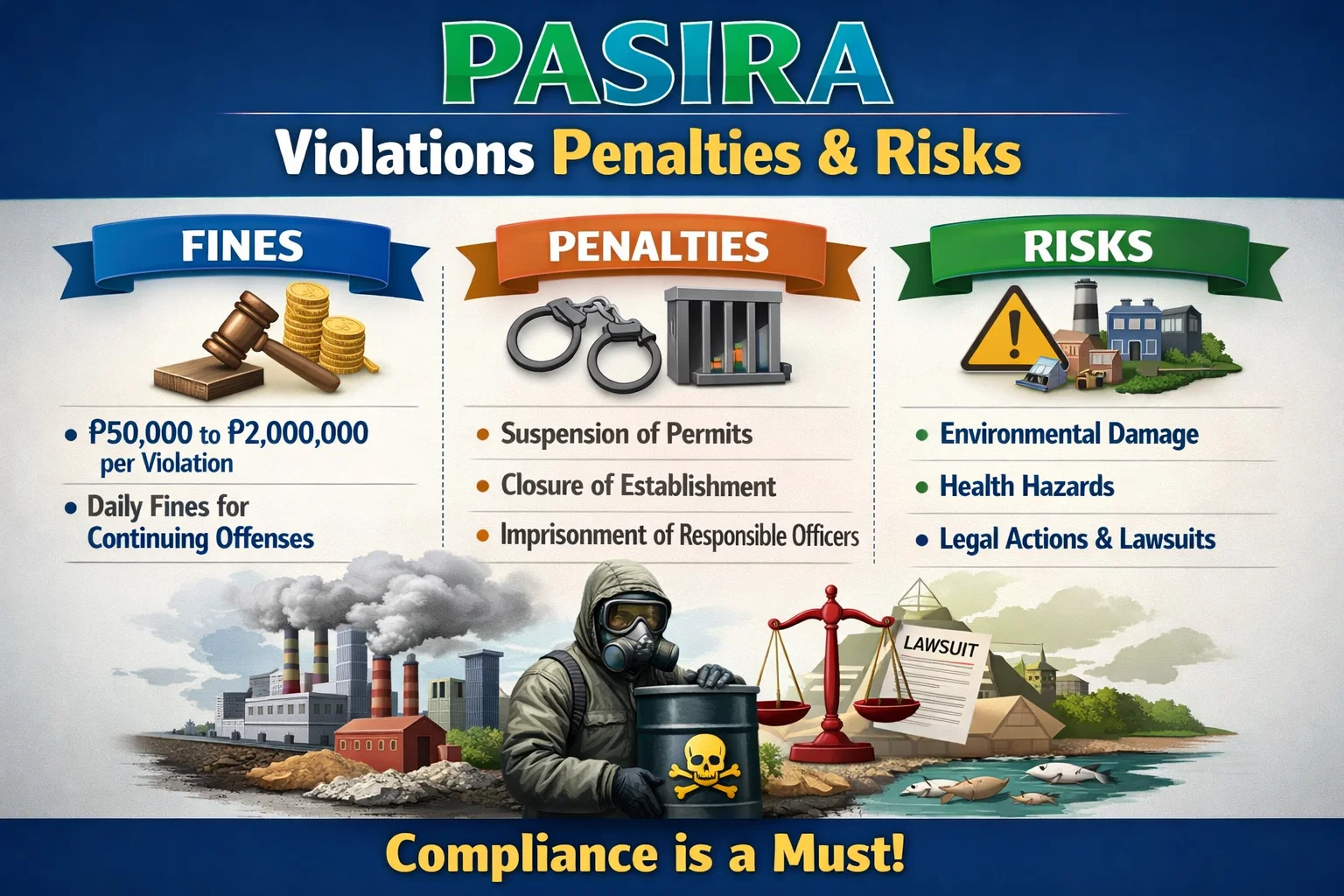
PASIRA Violations Penalties And Risks
Private security companies in South Africa play a critical role in protecting people, businesses, and public spaces. Because of the size and importance of the private security industry, it is strictly regulated by the Private Security Industry Regulatory Authority (PSIRA). These regulations are designed to ensure professionalism, accountability, and public safety.
When a security company violates PSIRA rules, it can face serious legal, financial, and operational consequences. This article explains what happens when a security company fails to comply with PSIRA regulations in South Africa.
PSIRA Regulatory Oversight in South Africa
PSIRA is responsible for regulating, monitoring, and enforcing compliance within the private security industry. All security companies and security officers must be registered with PSIRA before operating legally.
PSIRA regulations cover key areas such as company registration, annual renewals, training standards, background checks, uniforms, identification cards, conduct, and compliance reporting. Authorities also assess companies through inspections and internal evaluations, including processes such as a Psira grades check to determine whether required standards are being met.
Any failure to comply with these requirements is treated as a regulatory offence.
Suspension or Cancellation of Registration
One of the most serious consequences of violating PSIRA rules is the suspension or cancellation of a company’s registration.
If a security company operates without valid PSIRA registration, fails to renew its status, employs unregistered guards, or breaches registration conditions, PSIRA has the authority to suspend or permanently cancel the company’s registration. Once registration is cancelled, the company must immediately stop providing security services.
This often leads to contract termination, loss of income, and long-term reputational damage.
Criminal Offences and Prosecution
Certain PSIRA violations are classified as criminal offences under South African law.
Operating illegally, providing false information to PSIRA, employing unregistered security officers, or obstructing inspections can result in criminal charges. Penalties may include fines, imprisonment, or both, depending on the seriousness of the offence.
Company directors, managers, and responsible persons may also face personal criminal liability if they were involved in or failed to prevent the violation.
Administrative Fines and Financial Penalties
PSIRA has the authority to impose administrative fines for non-compliance.
Fines may be issued for breaches such as failure to submit compliance reports, improper uniforms or identification, lack of training records, or failure to meet minimum operational standards. Repeated violations usually result in higher penalties and stricter enforcement action.
These financial penalties can significantly affect the sustainability of a security business.
Personal Liability of Directors and Responsible Persons
PSIRA regulations place strong emphasis on accountability at management level.
Directors, owners, and responsible persons can be held personally liable if violations occur due to negligence, consent, or failure to exercise proper oversight. Claiming lack of knowledge is often not sufficient if reasonable steps were not taken to ensure compliance.
This makes internal compliance systems essential for every registered security company.
Civil Liability and Legal Claims
In addition to regulatory penalties, non-compliance can expose security companies to civil lawsuits.
If a security officer causes harm due to inadequate training, poor supervision, or unlawful deployment, affected individuals or businesses may claim damages. Civil claims can result in substantial compensation payments and further reputational harm.
Increased Inspections and Compliance Monitoring
Once a company is found in violation, PSIRA may subject it to increased monitoring.
This can include frequent inspections, audits, compulsory reporting, and corrective action requirements. While intended to improve compliance, increased oversight often raises operational costs and administrative pressure.
Reputational Damage and Loss of Business
PSIRA violations can seriously damage a company’s reputation.
Clients may lose trust, terminate contracts, or refuse to renew agreements. Government departments and large corporations are especially cautious and may avoid engaging companies with a history of non-compliance.
Rebuilding credibility after PSIRA enforcement action can be difficult and time-consuming.
Conclusion
Violating PSIRA rules in South Africa can result in serious repercussions, including suspension or cancellation of registration, criminal prosecution, financial penalties, personal liability for management, civil lawsuits, heightened regulatory scrutiny, and lasting reputational damage, especially for a grade c security rate.
Compliance with PSIRA regulations is not optional. Security companies that maintain valid registration, employ properly trained and registered officers, and implement strong internal controls are far better positioned to operate legally, protect public safety, and sustain long-term business success.