Soppressata Explained: Powerful Traditions and Modern Uses
Few cured meats spark as much curiosity among food lovers as Soppressata. This Italian specialty sits at the crossroads of tradition, craft, and regional pride. People searching for it usually want clear answers: what it is, how it differs from other salumi, whether it is healthy, and how it fits into modern cooking. This guide responds to those needs with clarity and depth.
In recent years, interest in artisanal foods has grown. As a result, traditional cured meats have returned to center stage. Home cooks, chefs, and curious eaters now seek authentic products with a story behind them. This article explains the origins, production, benefits, and challenges of this cured meat while showing how it is used today. The goal is simple: give you a complete, trustworthy understanding grounded in real culinary experience.
What Is Soppressata?
At its core, Soppressata is a traditional Italian dry-cured sausage made from coarsely ground pork. Unlike smoother salami, it keeps a rustic texture that reflects its handmade roots. The name comes from the Italian word soppressare, meaning “to press,” which refers to a key step in its preparation.
The meat is seasoned with salt and spices, then stuffed into natural casings. During curing, the sausage is pressed to remove air and shape it into a flatter form. This pressing step helps create a dense texture and balanced flavor.
Different Italian regions produce their own versions. Southern areas often favor chili for heat, while northern styles lean toward black pepper and wine. Despite these differences, the defining traits remain the same: bold flavor, firm bite, and careful aging.
Historical Roots and Cultural Importance
The history of Soppressata is closely tied to rural life. For centuries, Italian families raised pigs and used every part after slaughter. Nothing went to waste. Making cured meats was not a hobby but a necessity for survival through winter.
This sausage became a symbol of self-sufficiency. Recipes passed from one generation to the next, often guarded closely. In villages, tasting a neighbor’s cured meat was a sign of respect and trust. Even today, many families prepare it at home during the colder months.
Cultural festivals in Italy still celebrate this tradition. In some regions, protected designation status recognizes authentic methods. These practices reinforce the value of patience, skill, and respect for ingredients.
How Soppressata Is Made Step by Step
Understanding how Soppressata is produced helps explain its flavor and texture. The process is methodical and requires experience.
Step-by-step process
- Pork cuts, often shoulder and loin, are selected for balance of lean meat and fat
- Meat is chopped coarsely rather than finely ground
- Salt, spices, and sometimes wine are mixed in evenly
- The mixture is stuffed into natural casings
- Sausages are pressed to remove air pockets
- Curing takes place in controlled temperature and humidity
- Aging continues for weeks or months until fully developed
Each step matters. Too much moisture can spoil the meat. Too little humidity can dry it unevenly. Skilled producers rely on touch, smell, and experience as much as tools.
Regional Styles and Variations
One reason Soppressata attracts attention is its diversity. No single version defines it completely. Instead, regional styles offer different experiences.
In Calabria, chili peppers dominate. The result is spicy and deeply aromatic. Basilicata produces a milder version with fennel seeds. Tuscany prefers black pepper and wine, creating a balanced and earthy taste.
Outside Italy, immigrant communities adapted recipes to local conditions. American versions often use modern curing rooms and consistent spice blends. While different, these still respect traditional methods.
Flavor Profile and Texture
The taste of Soppressata is bold but balanced. Salt provides structure. Fat carries flavor. Spices add complexity without overpowering the meat.
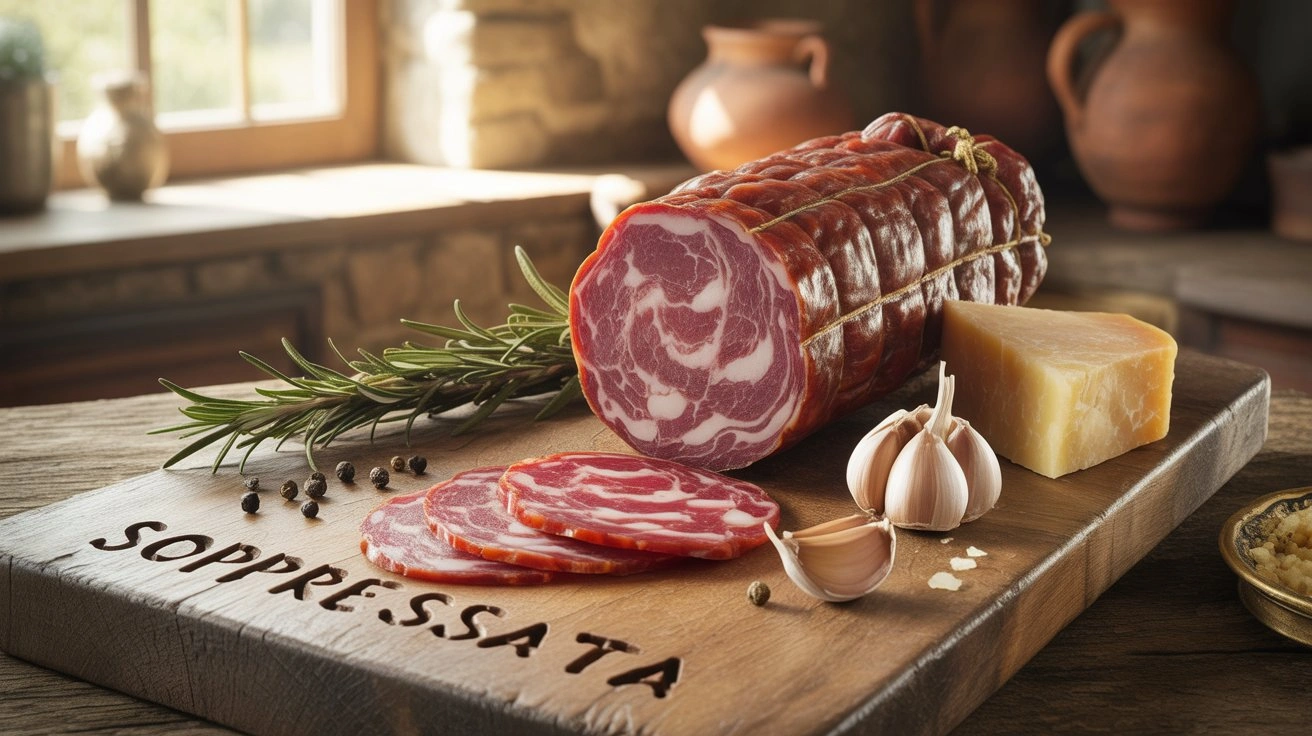
Texture sets it apart. Because the meat is coarsely cut and pressed, each slice shows clear pieces of lean and fat. This gives a satisfying chew rather than a smooth bite.
Aged properly, the aroma is clean and savory. Any sour or sharp smell suggests poor curing. High-quality versions offer depth without harshness.
Nutritional Value and Potential Benefits
Cured meats often raise health questions. Soppressata is rich in protein and provides essential minerals such as iron and zinc. Fat content varies by recipe, but traditional versions aim for balance rather than excess.
When eaten in moderation, it fits well into a varied diet. Its intense flavor means small portions satisfy. Compared to heavily processed meats, artisanal versions often contain fewer additives.
Fermentation during curing also contributes to flavor development. Some studies suggest fermented foods support gut health, although cured meats should not be considered health foods on their own.
Challenges and Considerations
Despite its appeal, Soppressata presents challenges for producers and consumers alike.
Safety is the first concern. Proper curing requires strict control of salt, temperature, and humidity. Inexperienced preparation can lead to spoilage or harmful bacteria.
Availability can also be limited. Authentic versions may be harder to find outside specialty shops. Price reflects time, skill, and quality ingredients.
Dietary concerns matter too. Sodium levels are high, which may not suit everyone. Understanding portion size is essential.
Soppressata in Modern Cooking
Modern chefs appreciate Soppressata for its versatility. It works both as a star ingredient and a supporting accent.
Thin slices enhance antipasto boards with cheese and olives. Diced pieces add depth to pasta sauces. Some chefs even use it on pizza or in sandwiches, pairing it with bitter greens or sharp cheese.
Home cooks benefit from its long shelf life. A small amount transforms simple dishes, making it a practical pantry item.
Real-World Examples and Use Cases
In professional kitchens, chefs often source regional versions to tell a story on the plate. A Calabrian-inspired menu might highlight spicy cured meats alongside local vegetables.
In home settings, families use it for gatherings. A platter with bread, cured meat, and wine creates an inviting atmosphere without complex cooking.
Specialty food shops also use tastings to educate customers. Allowing people to sample different styles builds appreciation and trust.
Buying and Storing Tips
When purchasing Soppressata, look for clear labeling and reputable producers. Natural casing, visible fat distribution, and a clean aroma signal quality.
Storage matters. Whole pieces keep longer than sliced ones. Wrap tightly and refrigerate. Once cut, consume within a reasonable time to preserve flavor and safety.
Avoid freezing if possible. While it prevents spoilage, it can affect texture.
Soppressata and Sustainability
Traditional curing aligns well with sustainable practices. Using whole animals reduces waste. Long shelf life minimizes spoilage.
Small producers often source locally, supporting regional agriculture. Consumers who choose artisanal products contribute to these systems.
However, sustainability also depends on responsible consumption. Quality over quantity remains the guiding principle.
Frequently Asked Questions
What makes Soppressata different from salami?
The main difference lies in texture and preparation. It is coarsely cut and pressed, while many salami are finely ground and cylindrical.
Is Soppressata cooked or raw?
It is not cooked. Instead, it is cured and aged until safe to eat.
How should Soppressata be served?
Serve it thinly sliced at room temperature to release aroma and flavor.
Can Soppressata be made at home?
Yes, but it requires knowledge of curing, proper equipment, and attention to safety.
Is Soppressata spicy?
Some regional styles include chili, while others are mild. Spice level depends on origin.
How long does Soppressata last?
Whole pieces can last several months when stored properly. Sliced portions should be eaten sooner.
Conclusion
Soppressata represents more than a cured meat. It reflects tradition, patience, and regional identity. From its careful production to its bold flavor, every aspect tells a story shaped by history and craft.
For modern eaters, it offers both pleasure and connection. Understanding how it is made, where it comes from, and how to use it allows deeper appreciation. When enjoyed thoughtfully, it remains a timeless example of how simple ingredients, guided by experience, can create something enduring.