Type B Bulb Explained: Uses, Standards, and Real-World Fit
A type b bulb is a small but important lighting component used in many homes and commercial spaces. People usually search for it when a fixture looks different, feels confusing, or does not accept standard bulbs. I have dealt with this exact issue while replacing bulbs in older ceiling fans and decorative wall fixtures. The label was not clear, and guessing led to wasted money.
This article explains everything clearly, without assumptions. You will learn what this bulb type is, where it is used, how it differs from others, and how to choose the right one with confidence. The goal is simple. Help you solve the problem once and correctly.
A type b bulb in LED form stays cooler, notes lighting specialist Sergio Novak. This protects sockets and wiring. It also reduces the chance of glass covers cracking over time.
What Is a Type B Bulb?
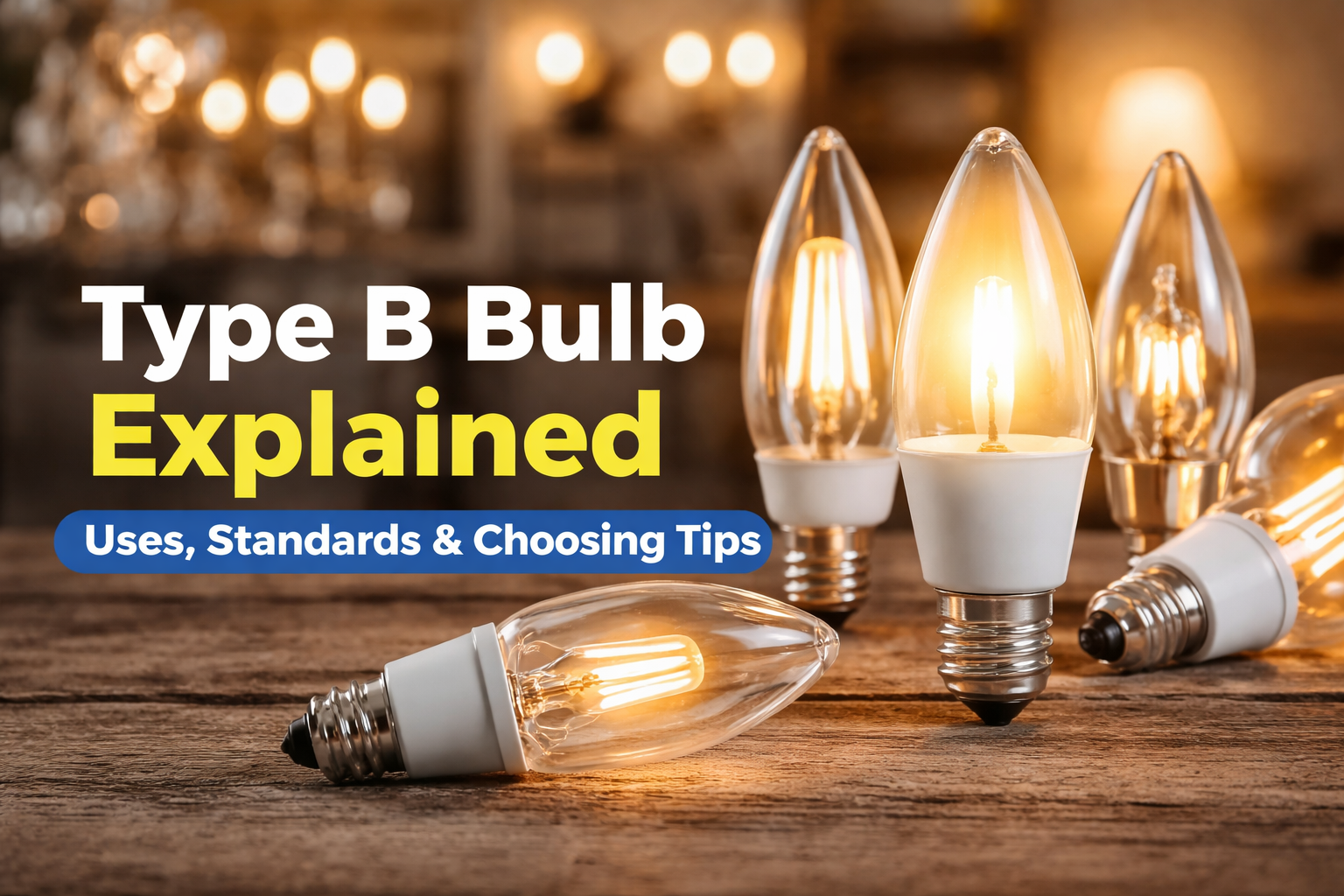
A type b bulb is a bulb shape classification, not a brand or technology. The letter B refers to a blunt tip or bullet shape, not round like a standard bulb. It is narrow, compact, and often designed for decorative or space-limited fixtures.
These bulbs are commonly paired with smaller bases, especially candelabra bases. Their shape allows them to fit inside slim glass covers, chandelier arms, and fan housings.
Key Physical Traits
- Narrow body with a blunt or slightly pointed tip
- Shorter length than standard bulbs
- Designed for exposed or semi-exposed fixtures
- Often clear or frosted for aesthetic appeal
This design is intentional. It balances light output with visual appearance.
Why People Confuse Type B Bulbs
In my experience, most confusion comes from mixing up bulb shape, base type, and lighting technology. These are three different things.
A type b bulb describes shape only. It does not tell you:
- The base size
- Whether it is LED or incandescent
- The wattage or brightness
For example, you can buy a type B bulb with an LED interior and a candelabra base. You can also find older incandescent versions. The shape stays the same. Everything else changes.
Common Base Types Used With Type B Bulbs
Most fixtures that use this bulb shape rely on smaller bases.
E12 Candelabra Base
This is the most common pairing. The base is narrow and screw-in, used in chandeliers and fans.
E26 Medium Base
Less common but still found in some decorative fixtures. Always check before buying.
A type b bulb will not fit if the base size is wrong, even if the shape looks correct.
Where Type B Bulbs Are Commonly Used
Understanding real-world usage helps avoid mistakes.
Ceiling Fans
Many ceiling fans use slim bulbs to fit under glass covers. This is where I personally encounter them most often.
Chandeliers
Their elegant shape works well with exposed arms and decorative designs.
Wall Sconces
Space-saving fixtures often require a narrow bulb.
Vanity Lights
Some vanity bars use this shape for balanced spacing and style.
Accent Lighting
Display cases and architectural lighting may also rely on it.
These applications favor appearance and fit as much as brightness.
Lighting Technologies Available
A type b bulb can be built using different lighting technologies.
LED
This is now the most common option.
- Long lifespan
- Low energy use
- Minimal heat output
Incandescent
Older fixtures may still use these.
- Warm light quality
- Shorter lifespan
- Higher energy use
Halogen
Less common today but still available.
- Brighter than incandescent
- Runs hotter
From a practical standpoint, LED versions are the safest and most efficient choice.
Brightness and Color Temperature
Because of their size, people assume these bulbs are dim. That is not always true.
Brightness Range
Most options fall between 300 and 600 lumens. This is enough for accent or ambient lighting.
Color Temperature Options
- Warm white for cozy spaces
- Neutral white for balanced lighting
- Daylight tones for task-oriented areas
Choosing the right color temperature matters more than raw brightness in decorative fixtures.
Energy Efficiency and Heat Management
One overlooked benefit of modern designs is heat control. In tight fixtures like fans, heat buildup causes failures.
A type b bulb in LED form stays cooler. This protects sockets and wiring. It also reduces the chance of glass covers cracking over time.
From personal observation, switching to LED reduced maintenance issues in enclosed fixtures.
Safety Considerations
Small fixtures mean small margins for error.
Wattage Limits
Always follow the fixture’s rated maximum wattage. Exceeding it can cause overheating.
Enclosed Fixtures
Only use bulbs rated for enclosed spaces if applicable.
Dimmability
Not all bulbs support dimming. Check compatibility with your dimmer switch.
Ignoring these details can shorten lifespan or create safety risks.
How to Choose the Right Type B Bulb
This is the section most readers care about.
Step 1: Check the Base
Remove the old bulb and confirm the base size.
Step 2: Measure Clearance
Some fixtures have strict length limits.
Step 3: Choose Technology
LED is usually the best option.
Step 4: Select Color Temperature
Match the room’s purpose and mood.
Step 5: Confirm Dimmability
Only if your fixture uses a dimmer.
This process avoids guesswork and returns.
Common Buying Mistakes
I have made most of these myself.
- Assuming shape determines base size
- Ignoring fixture length limits
- Choosing too high wattage
- Mixing color temperatures in the same room
A type b bulb must match the fixture, not just look similar.
Performance Expectations in Real Use
These bulbs are not designed to flood a room with light. They provide:
- Accent illumination
- Decorative glow
- Even light distribution in compact spaces
Expecting them to replace overhead lighting leads to disappointment.
Longevity and Maintenance
LED versions often last 15,000 to 25,000 hours. In ceiling fans, that can mean years without replacement.
Reduced heat also protects sockets. Over time, this lowers maintenance costs.
Environmental Impact
Smaller size does not mean smaller impact.
LED versions:
- Reduce energy use
- Lower replacement frequency
- Decrease waste
This makes them a practical choice for sustainability-focused homes.
Compatibility With Smart Systems
Some modern options support smart controls.
- App-based dimming
- Voice assistant integration
- Scheduling
However, always verify compatibility. Not every smart system supports every bulb type.
When Not to Use a Type B Bulb
There are limits.
- Large open fixtures
- High-output task lighting
- Outdoor flood applications
Using the wrong bulb shape leads to poor results.
Maintenance Tips From Experience
Based on repeated replacements over the years:
- Clean sockets before installing new bulbs
- Avoid overtightening
- Replace all bulbs in a fixture at once for color consistency
These small steps improve performance and appearance.
Frequently Asked Questions
What does type B mean in bulbs?
It refers to the bulb’s shape. It is narrow with a blunt or pointed tip.
Are type B bulbs always small?
Yes, they are designed for compact fixtures and decorative use.
Can I use LED in older fixtures?
Usually yes, as long as the base and wattage match.
Do these bulbs work with dimmer switches?
Only if the bulb is labeled as dimmable.
Are they bright enough for daily use?
They work well for ambient and accent lighting, not main room lighting.
Conclusion
A type b bulb solves a specific lighting need. It fits where standard bulbs cannot and adds visual balance to decorative fixtures. Understanding its shape, base, and use cases removes frustration and wasted purchases. When chosen carefully, it delivers reliable performance, energy efficiency, and long-term value.